
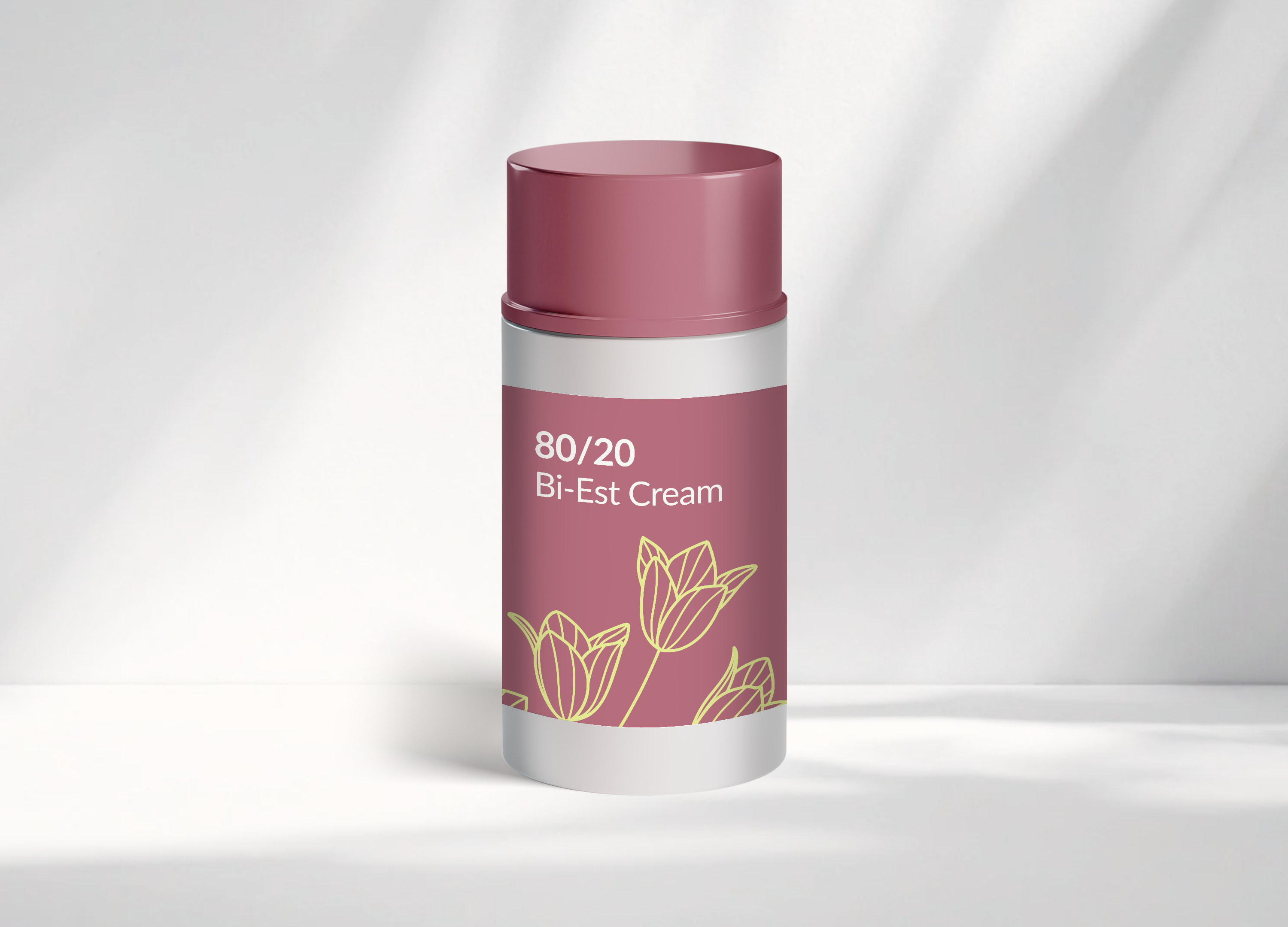
Bi-Est Cream (80:20)
This treatment is available as a 3-month program. Your upfront payment is $297 ($99/month for 3 months).
Treatment Information
Description
Biest (80:20) is a compounded bioidentical hormone therapy containing a specific ratio of two naturally occurring estrogens: 80% estriol (E3) and 20% estradiol (E2). This formulation represents the most commonly prescribed Biest ratio and is often considered a balanced approach to estrogen replacement. Estradiol is the most potent form of estrogen and the primary estrogen produced by the ovaries during reproductive years, playing crucial roles in bone density maintenance, cardiovascular health, cognitive function, and urogenital tissue health. Estriol is a weaker estrogen that may offer benefits for vaginal and urinary tract health while potentially providing a more moderate overall estrogenic effect.
The 80:20 ratio is designed to provide therapeutic benefits of estradiol while incorporating a higher proportion of estriol, which some practitioners believe may offer a gentler, potentially safer estrogenic profile. This formulation may be particularly suitable for women who are sensitive to stronger estrogen preparations, those new to hormone therapy, or those seeking symptom relief with a more conservative estrogenic approach. The higher estriol content may also provide specific benefits for genitourinary health while contributing to overall hormonal balance.
Transdermal delivery of Biest cream offers steady hormone absorption through the skin, avoiding first-pass hepatic metabolism and allowing for flexible dose adjustments. This 80:20 formulation may help alleviate common menopausal symptoms such as hot flashes, night sweats, vaginal dryness, mood changes, and sleep disturbances while supporting bone health and overall quality of life during menopause and beyond. The bioidentical nature means the hormones are molecularly identical to those naturally produced by the human body.
What To Expect
Biest (80:20) cream is applied topically to thin-skinned areas of the body such as the inner arms, inner thighs, or abdomen, where absorption is optimal. Symptom relief typically begins within 2-4 weeks of starting therapy, though some women notice improvements sooner. Full therapeutic benefits often emerge over 2-3 months as hormone levels stabilize and tissues respond to treatment. The 80:20 ratio may produce a gentler onset of effects compared to higher estradiol formulations.
Individual response varies based on factors including baseline hormone levels, symptom severity, dosing, and application consistency. Your provider will likely recommend follow-up laboratory testing and clinical assessments to monitor hormone levels and symptom response, adjusting your prescription as needed. The 80:20 formulation may be ideal for initial therapy, with the option to adjust ratios if stronger estrogenic effects are needed. Some women may experience mild breast tenderness or spotting during the initial adjustment period, which typically resolves as the body acclimates to therapy.
How To Use
Safety Information
Estrogen therapy carries certain risks and is contraindicated in women with a history of breast cancer, estrogen-dependent tumors, active or history of blood clots, active liver disease, or unexplained vaginal bleeding. Potential side effects may include breast tenderness, bloating, headache, mood changes, or spotting. Long-term estrogen use may increase the risk of blood clots, stroke, and certain cancers. Women with an intact uterus typically require progesterone therapy in addition to estrogen to protect the uterine lining. Discuss your complete medical history with your provider before beginning hormone therapy.